Art projects
Art projects
Collaborative and individual artistic work.
“ a BODY RITE OF CULTURE AND DECAY”
“Fermentation trains us in seeing the ground as inherently shaky. It makes visible the invisible potential of those things that seem still.”
— Mercedes Villalba, “Manifiesto Ferviente”, 2017
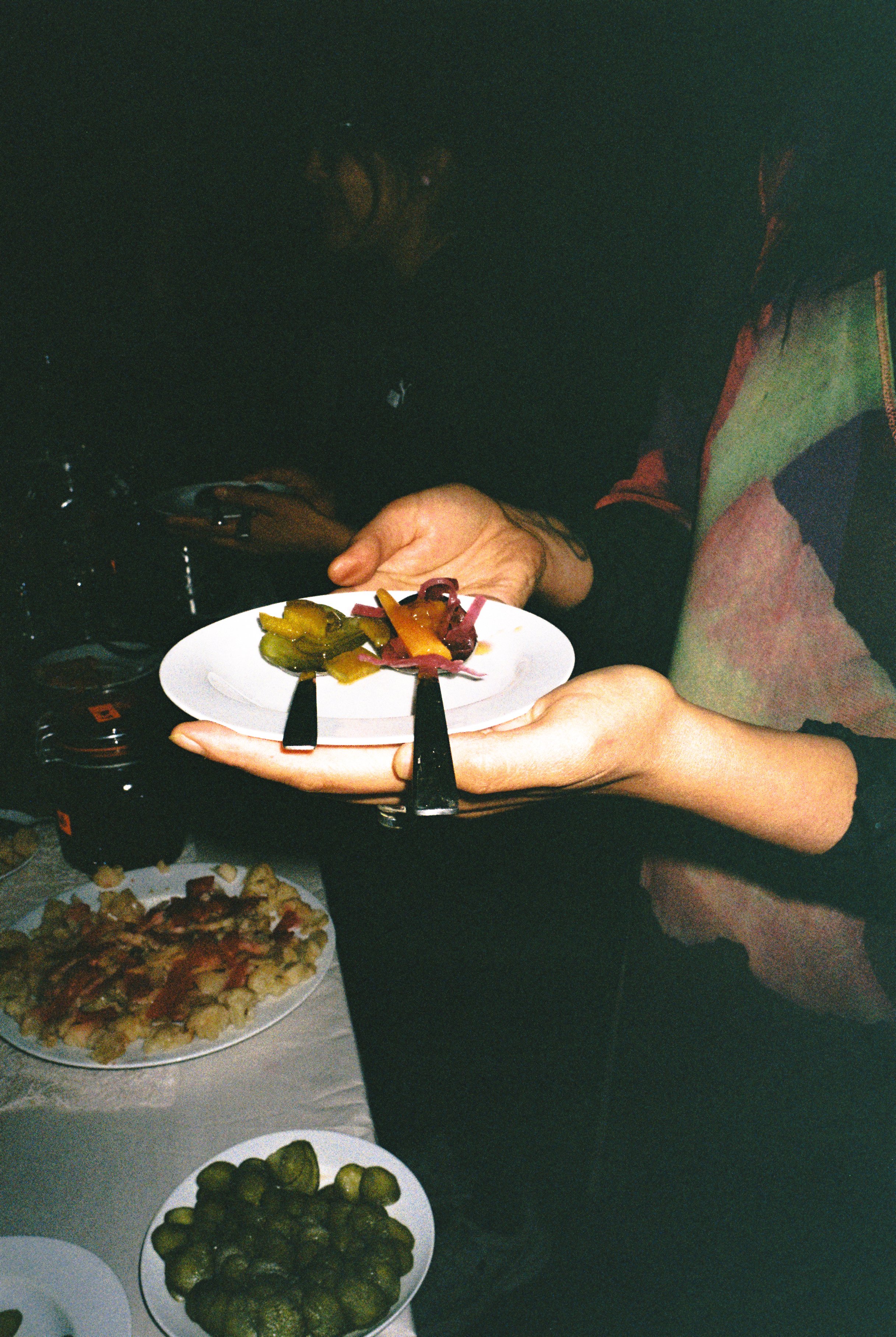
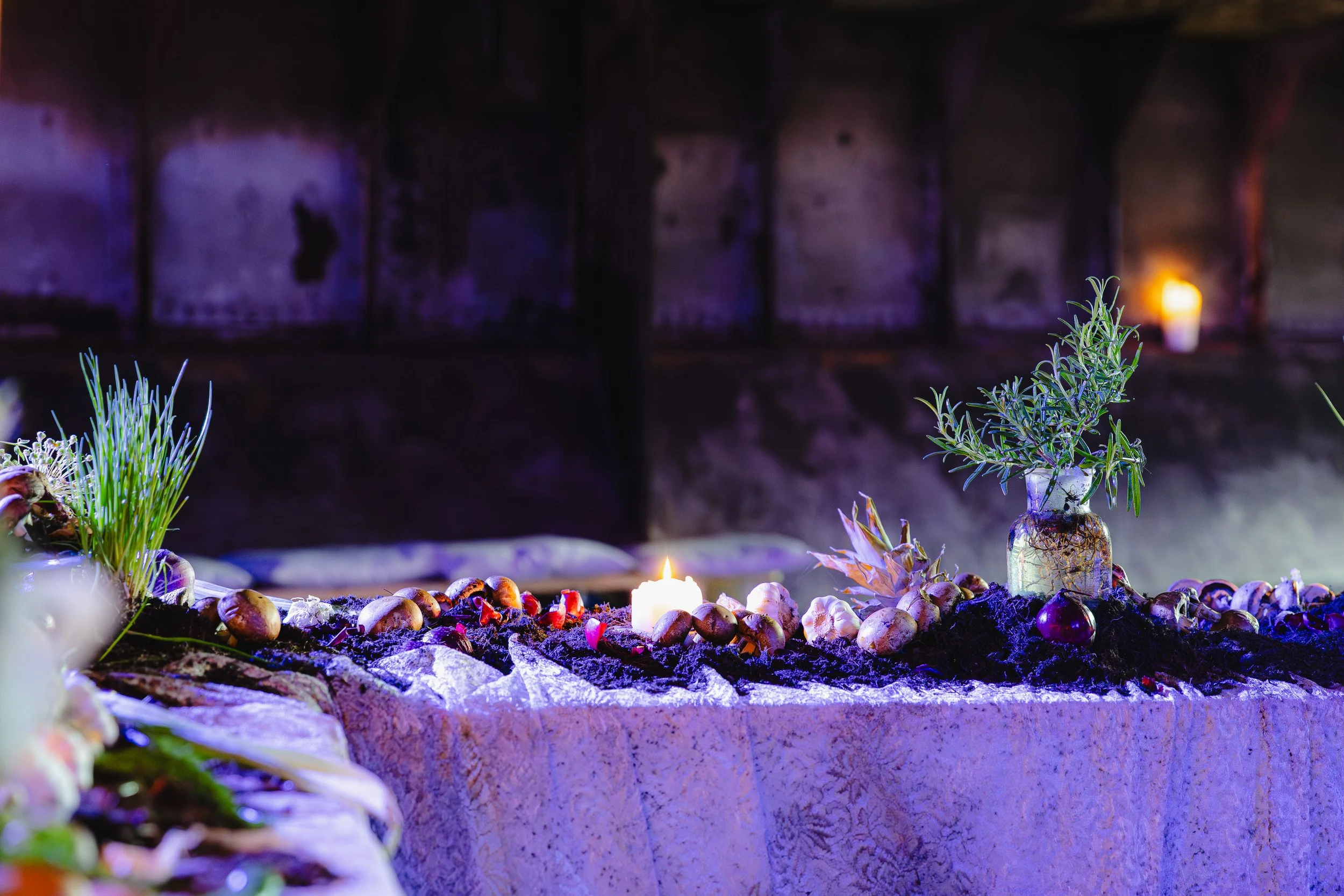
“A Body Rite of Culture and Decay” is a site-specific installation by Yupanqui Ramos , Ana Julia Fortes and Pedro André, Laureates of the Hošek Contemporary Prize 2026.
Exploring fermentation as both a material process and a cultural metaphor, this work sits at the intersection of art, ecology and communal dining. It presents transformation as an ongoing condition of life, viewing decomposition not as an end, but as a necessary prelude to renewal.
A live sound performance responds to fermentation’s rhythms, textures, and Structured around a banquet table, the installation embodies cycles of growth, decay, and regeneration.
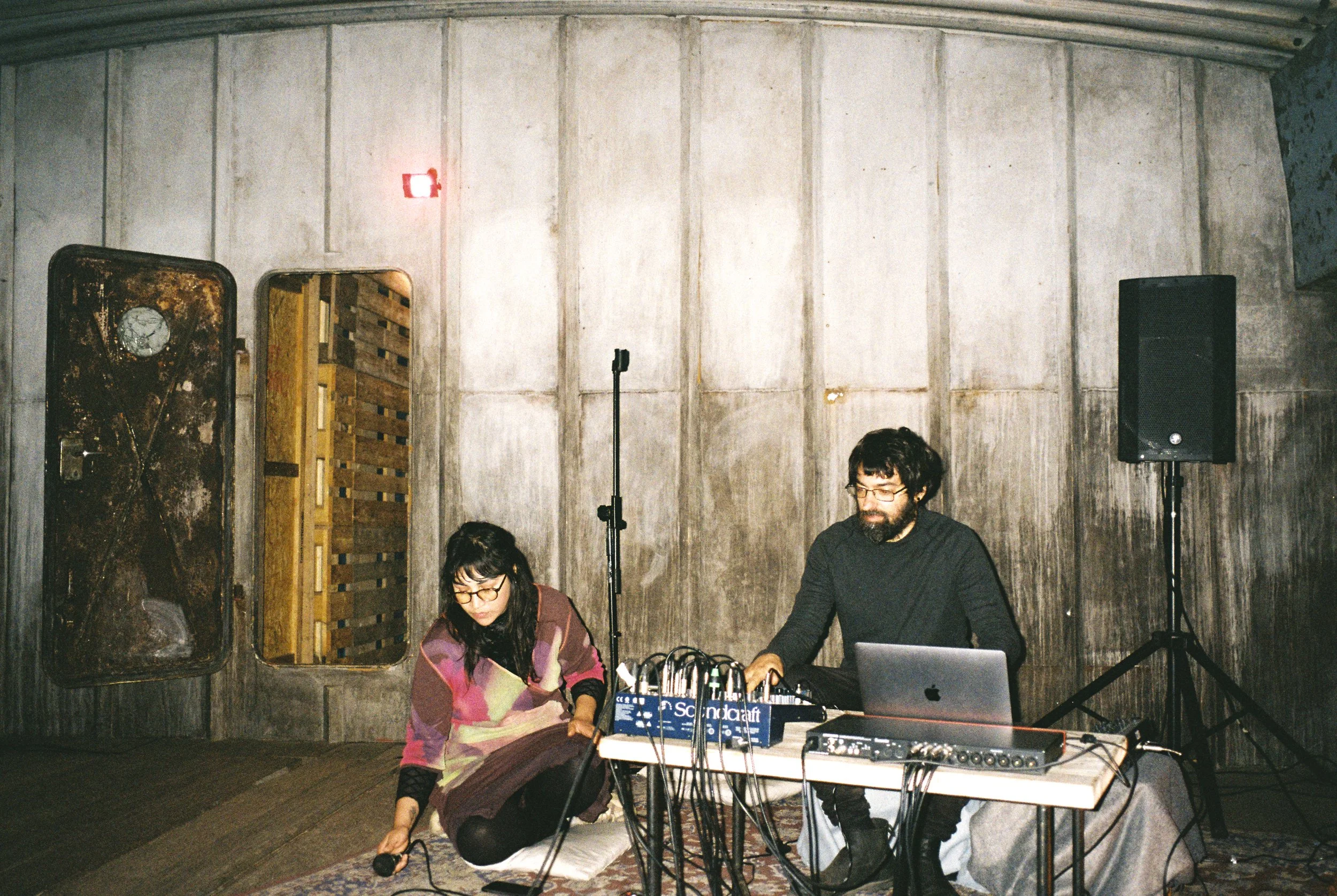
“Error 404: soil not found” - performance.
Explore the collision between genetic engineering and ancient agricultural wisdom. Biocolonialism – biopiracy- anti-capitalist biotechnology future is possible.
Who owns CRISPR- Cas9 use in modern Medicine and agriculture?
What happen whit Indigenous seeds?
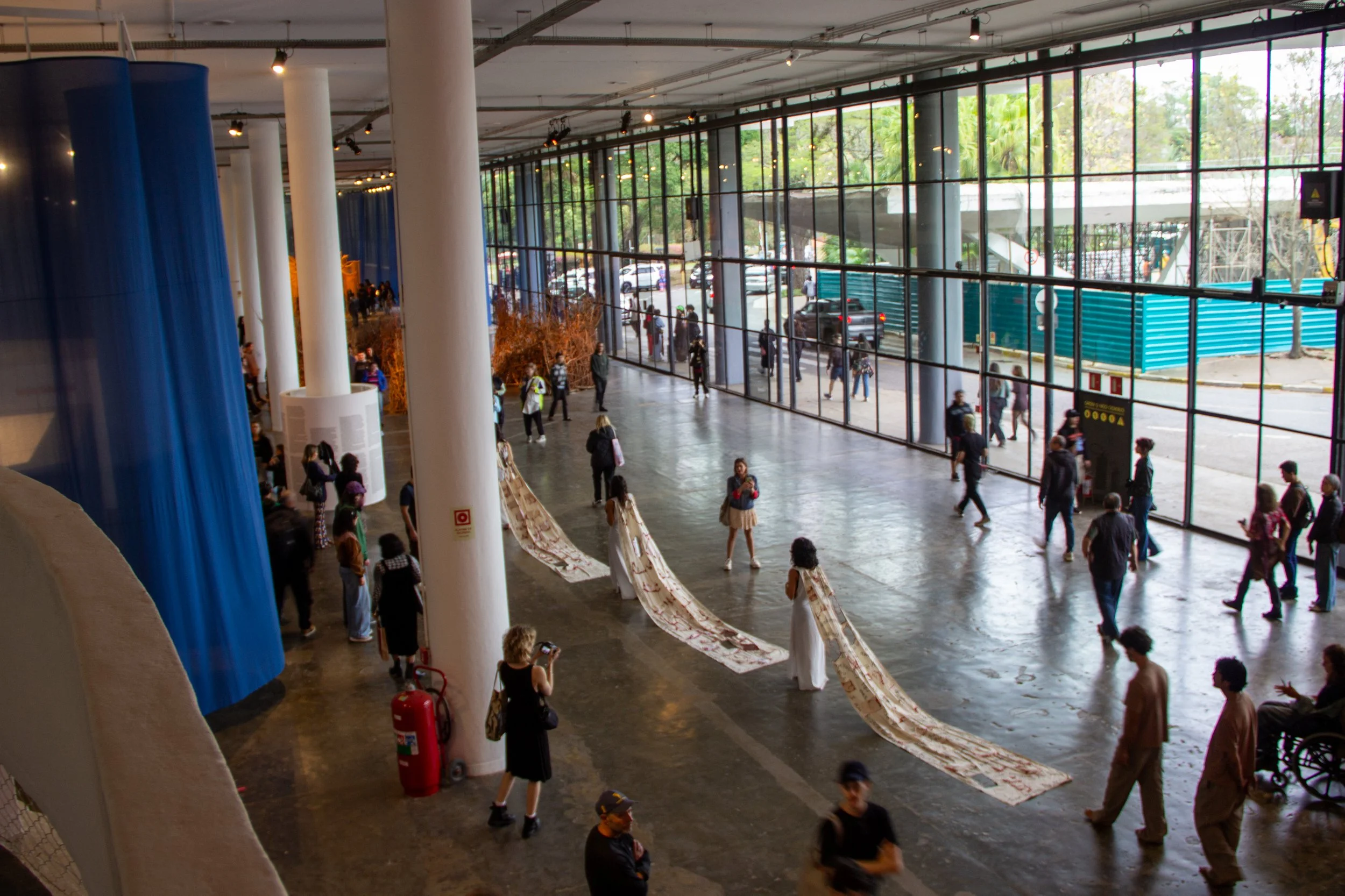
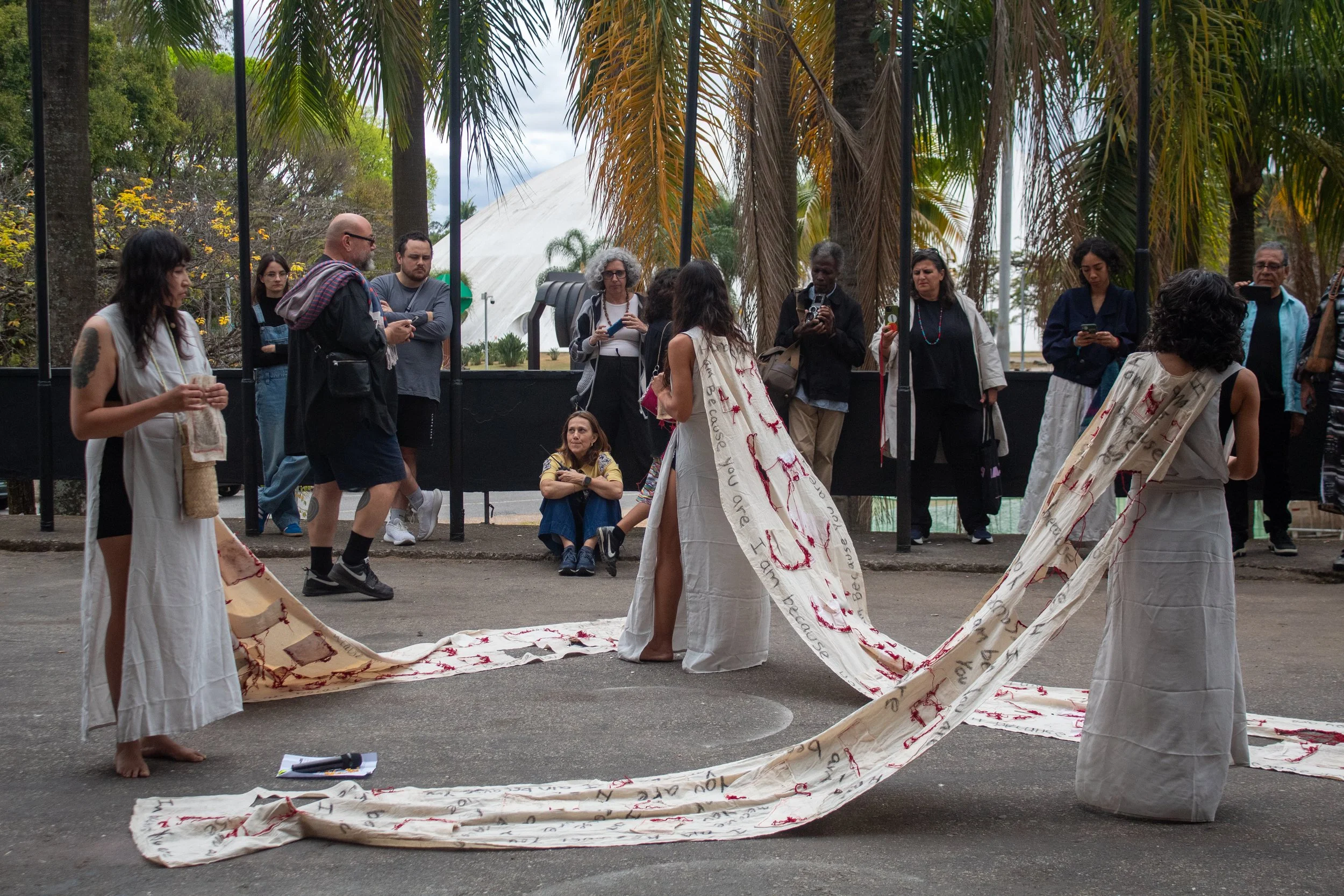
Based philosophical and technological (open-source system) frame of Ubuntu “I am because you are”. Ubuntu encompasses the interdependence of humans on one another and the acknowledgment of one’s responsibility to their fellow humans and the natural world around them. It is a philosophy that supports collectivism over individualism. „No gene exists in isolation “
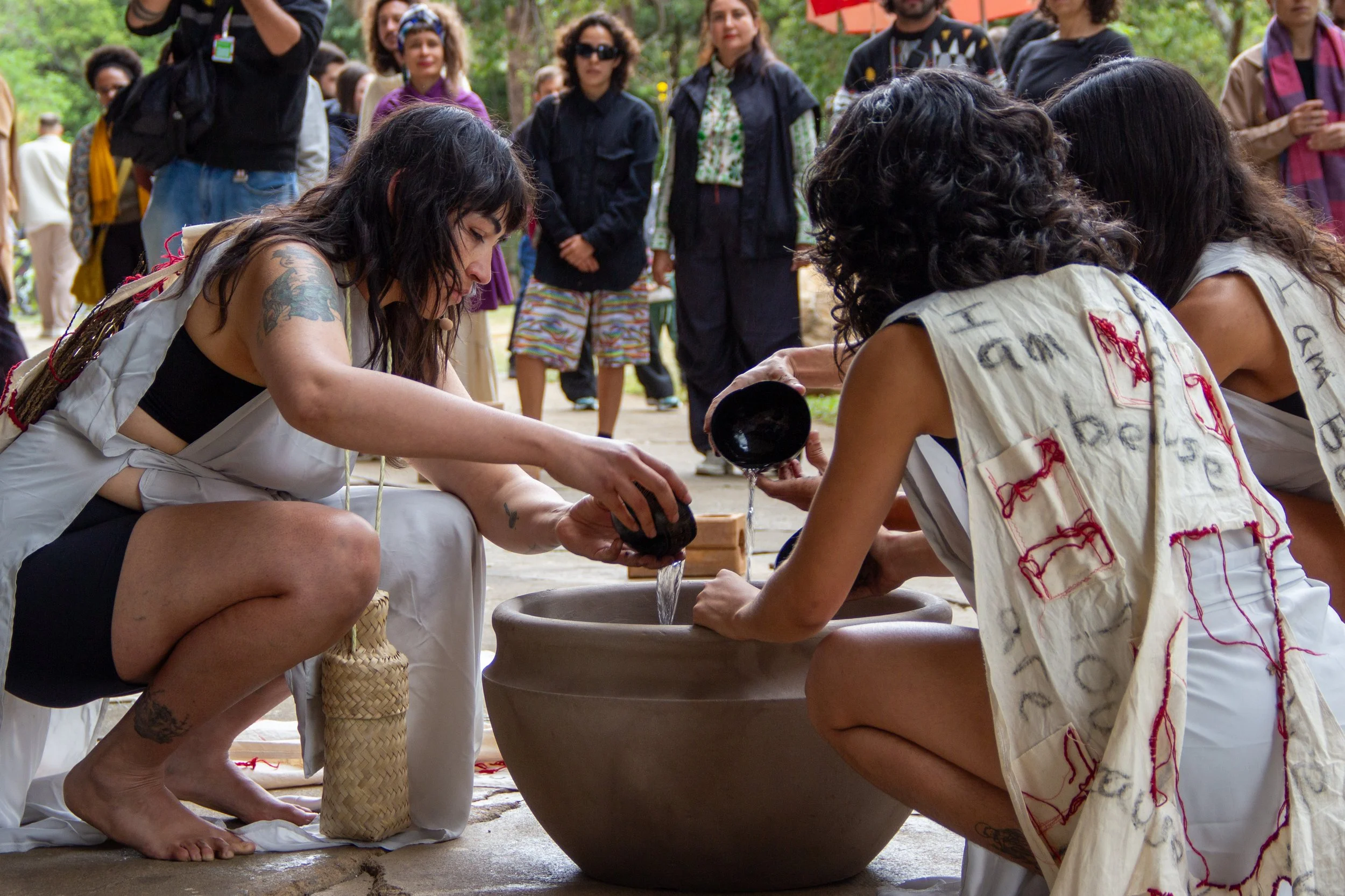
Three performers (seeds) offer the public a horizontal view of the knowledge of the Milpa system (the tree sisters), maize, beans and squash. They function as living archives , architects and testimonies of race in techno-science and GMOs in modern agriculture, navigating a space where scientific progress and ancestral knowledge converge.
Clad in a garment that is both ritual dress and living ecosystem—pockets filled with soil, a woven bag holding seeds and scissors—they move through a timeline of CRISPR-Cas9’s history. Corporate patents and lab breakthroughs are recited like incantations, while the rustle of natural seeds provides a sonic counterpoint.
The performance culminates in a questioning ritual: Who owns life? What is lost when we edit a gene? Can technology serve reciprocity rather than extraction? In the conflict between the 10,000-year-old Milpa technology of reciprocity and the promise of control offered by CRISPR, which future will take root? The performer plants seeds of inquiry in a central earth mound.
This is a meditation on sovereignty, symbiosis and the seeds we alter.
Waiting to Exhale
Symbiotic Entanglemts
“Waiting to Exhale” is a speculative audio-visual piece by Yupanqui Ramos and Katheleen Bomani developped as part of collaborative workshop by the collective Interspecifics as part of “The book of transmutations - chapter 4: The intelligence of plants” held by Plant Stories program at zku.berlin, 2025.
It is a call and response set against sound and moving image, centered on a imagined Antarctic plant, “Glaciorrhiza memorium”—the Listener. Through voice, glacier footage of ancient live in Antartica and AI tools, we explore how memory lives in ice and what it means to turn collapse into renewal.
The piece reimagines climate collapse as a form of planetary healing and invites us to perceive trauma as a portal to deeper entanglement. Here, human bodies become incubators for posthuman futures, and the unravelling of our world becomes an invitation to weave ourselves back into the fabric of a living, remembering Earth.
This fictional short story, argues that our deepest wounds—personal, ancestral, and ecological—are not terminal illnesses to be cured by isolation, but rather portals to a more integrated and intelligent way of being.
The story attempts to dismantle core human myths, separation : the idea that humans are distinct from nature, from each other, and from our past is a fiction.
Linear Progress and Control: The central question shifts from “What can we control?” The past is not behind us; it is a living layer beneath us, waiting to be metabolized.
“Faded Memory”
Research-based Project, Savvy Contemporary, Berlin 2024.
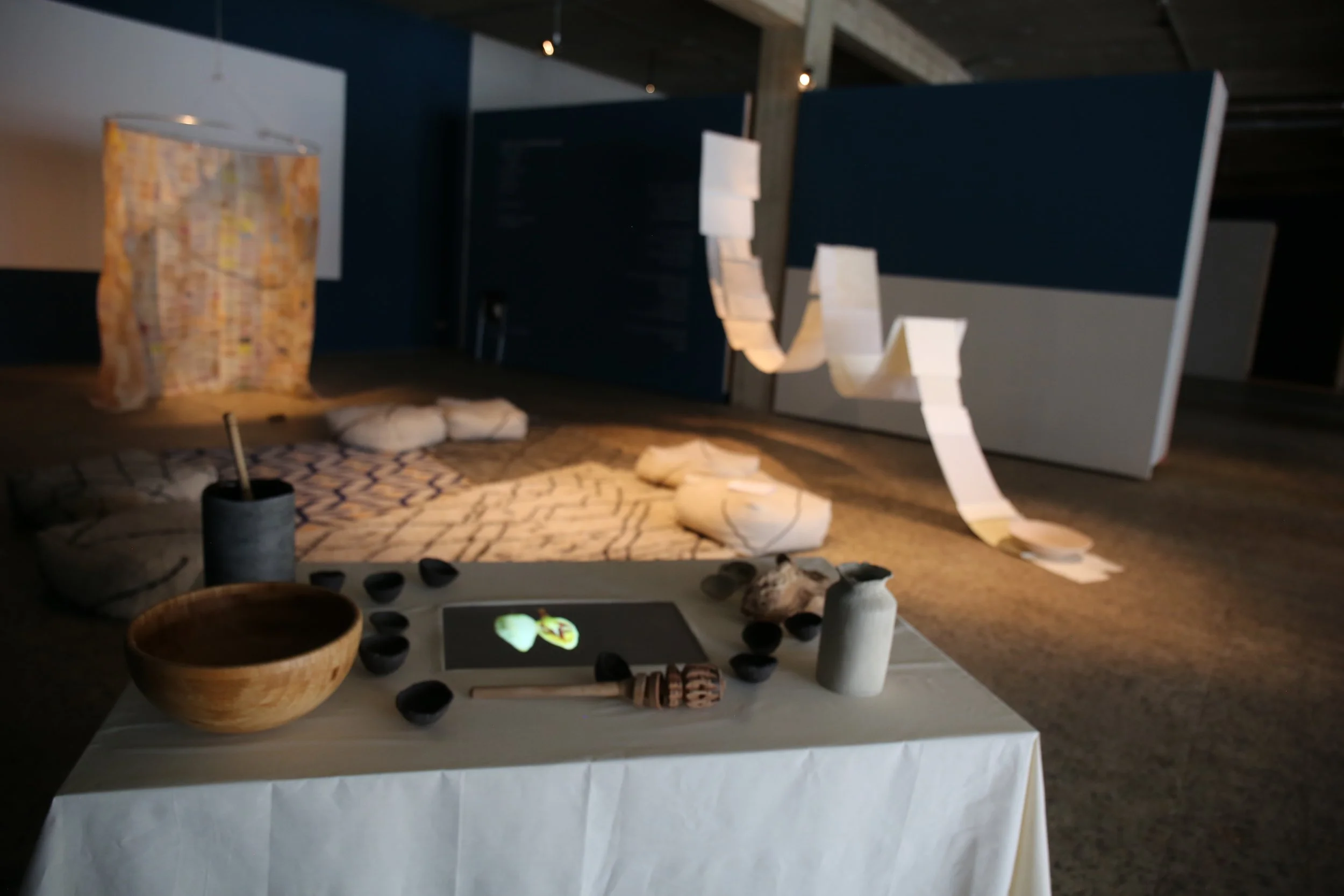
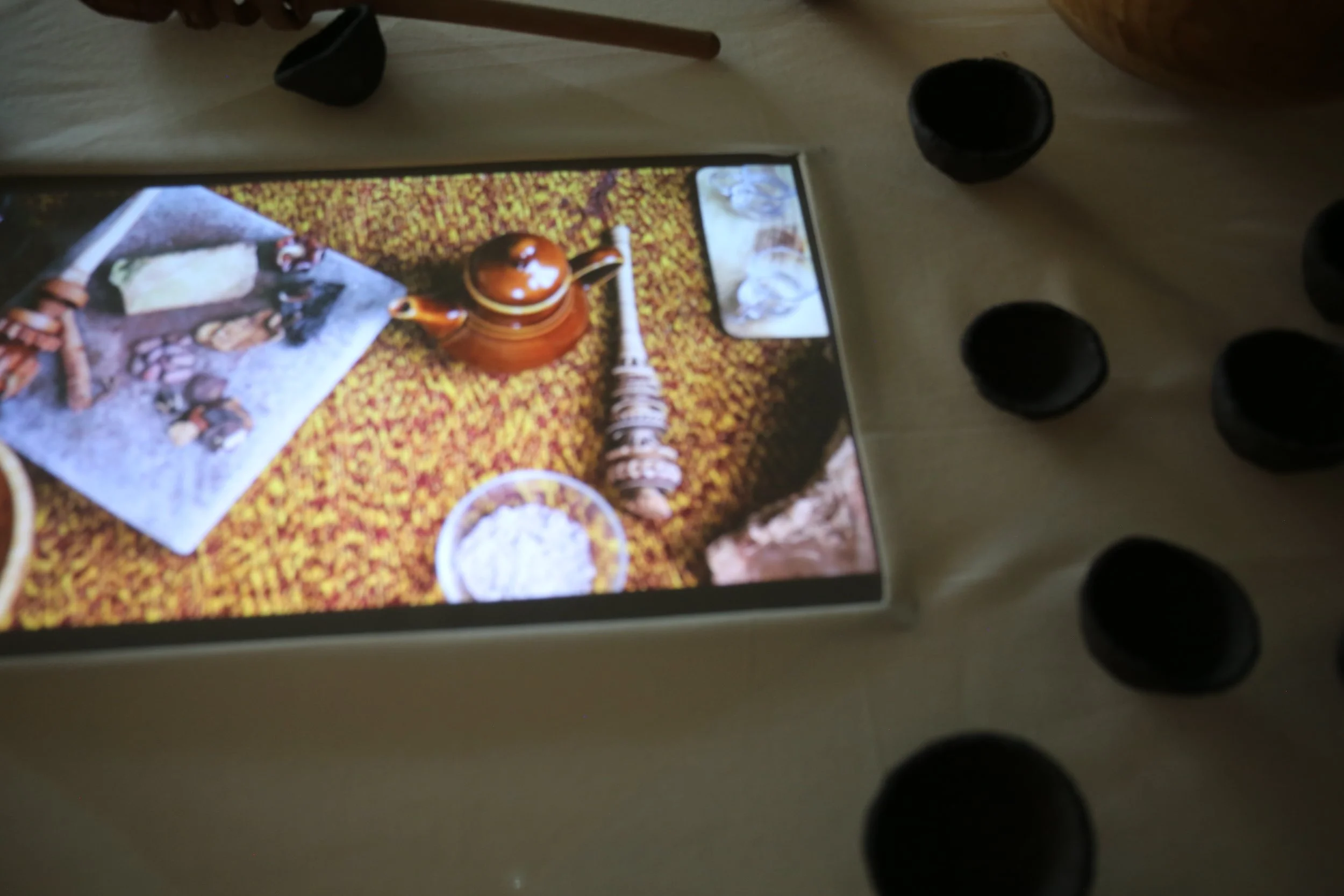
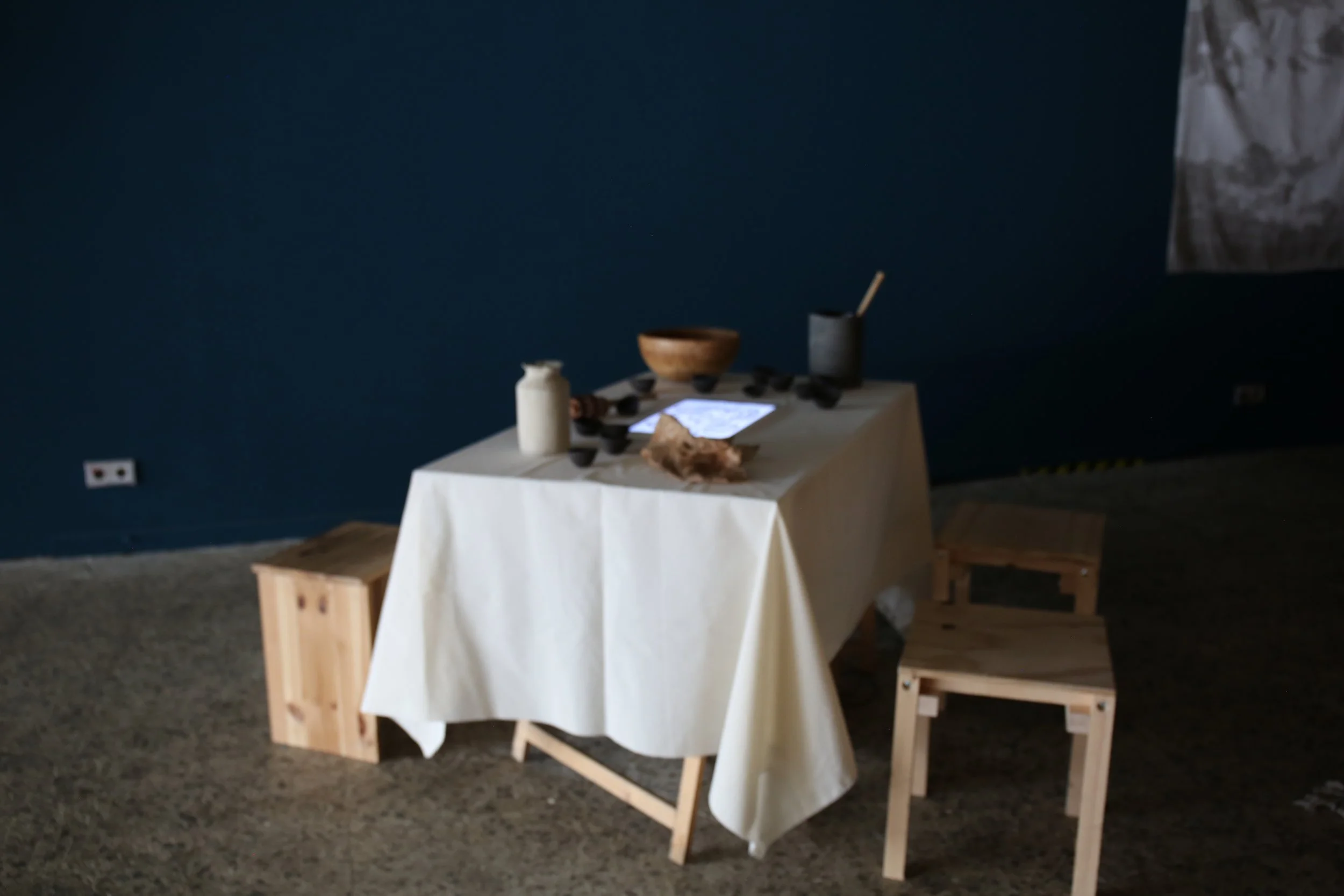
This video and sound installation immerses the viewer in a sensory journey to the origins of „Xocolātl“—the Nahuatl term for the sacred process of transforming cocoa into a drink. By reviving the textures, sounds, and rituals of this ancestral practice, the work creates a stark contrast with our contemporary reality, prompting a profound reflection on our physical and spiritual disconnection from the origins of what we now know as chocolate. It questions the true value of this substance in modern society, framing the traditional method not as a historical footnote, but as a critical counter-narrative to today’s systems of mass production and consumption.
The installation specifically interrogates the German chocolate industry as a driver of overconsumption and a perpetuator of exploitation, affecting both human communities and ecosystems, particularly in Southwest Africa. To frame this critique, the project employs Michel Foucault’s concept of the *heterotopia*—a real space that functions as a counter-site, simultaneously representing, contesting, and inverting all other spaces. Through this lens, the chocolate factory is re-examined not merely as an architectural site of production, but as a complex vessel of memory and a layered artifact of the last 150 years of cultural, economic, and colonial history.
These factories, often celebrated as monuments to modern progress and industrial innovation, embodied a dual nature. While their architecture symbolized advancement, the companies within were frequently engaged in intensive resource extraction, a process that has accelerated deforestation and triggered cascading socio-economic and health crises. This has pushed vulnerable regions toward a state of ecological ruin, embedding this difficult legacy within the very bricks and mortar of the structures. The factory space thus becomes a heterotopia where the gleaming narrative of progress is shadowed by the ghosts of exploitation and environmental degradation.
This theoretical and historical research finds its physical focus in the very space where the project is being developed: the architectural site of the Kunsthochschule Weissensee, University where I did my master‘s degree.
Which was formerly the service office of the Trumpf chocolate factory. The project, *Faded Memory*, uses this specific location as its primary case study, exploring the space as the first step in uncovering the complex relationship between agricultural histories and the factory as a heterotopic site.
NADA: Hope or nothing
Between Memory and History: The Transformative Void
Yupanqui Ramos and Asuman Kirlagic, Rundgang Weißensee Kunsthochschule, Berlin 2024.
The title of the piece, “Nada: Hope or Nothing,” references the poetry collection „The Blue Butterfly „© Richard Berengarten (2006).
In the 1990s, amid the aftermath of genocidal conflict, the mass graves of Bosniak Muslims began to be uncovered across Srebrenica. This somber discovery was significantly aided by a common blue butterfly and forensic anthropologist Margaret Cox she is a semi-retired academic and writer with experience investigating mass graves, including unrecovered war graves worldwide. Since 2008, she has served as Scientific Adviser to the Fromelles Project, overseeing forensic archaeology, anthropology, and human identification.
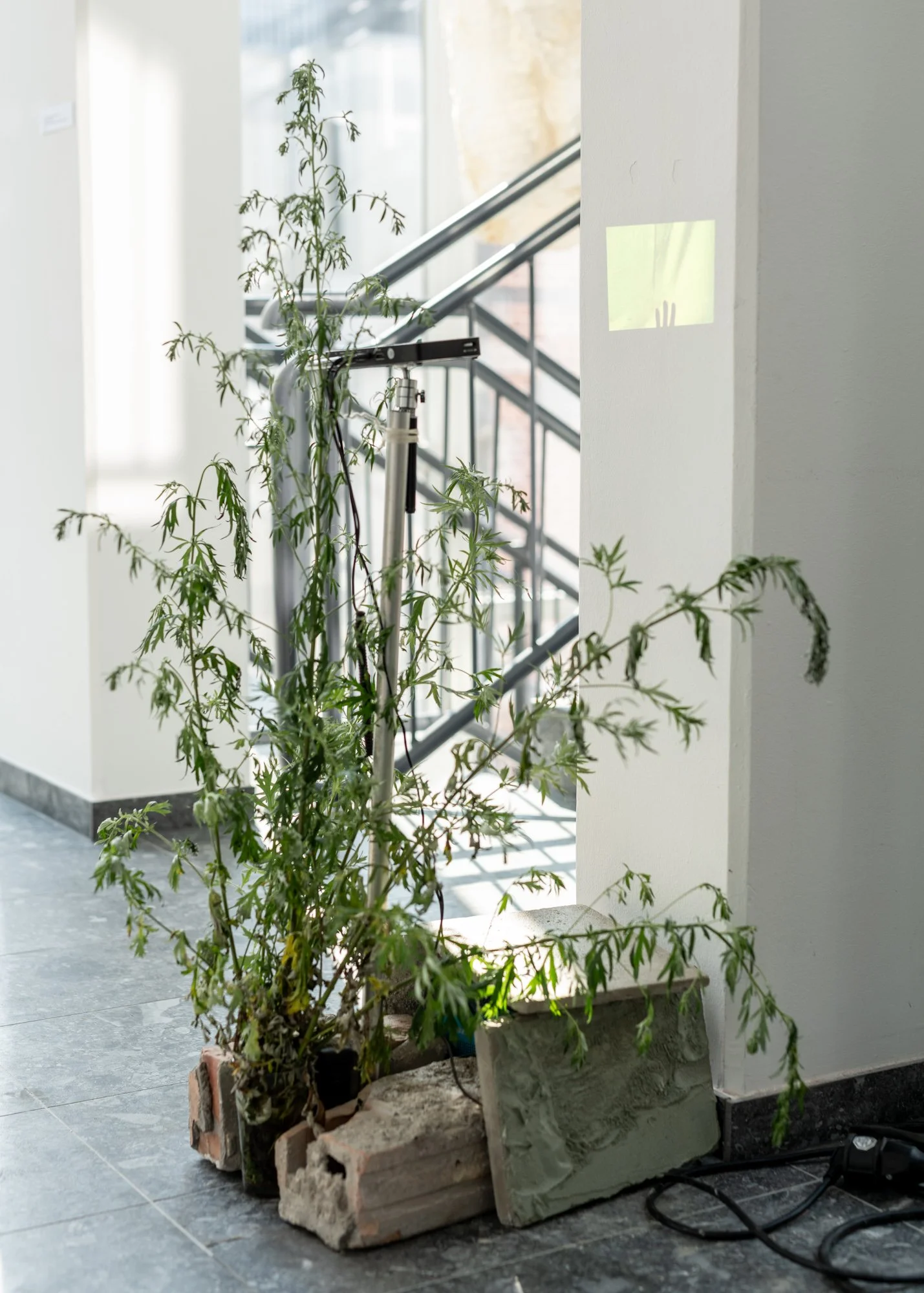
In the butterfly kingdom, each species feeds on a specific “host” plant. This particular blue butterfly feeds exclusively on Artemisia vulgaris—better known as mugwort.In the Balkans, clouds of blue butterflies gathered on dense banks of Artemisia, which flourished suddenly due to changes in soil nutrient levels and the disturbance of dormant seed banks. This dense colonization occurred in 1999, with the plants blossoming in Kosovo. Despite all technological efforts, it was nature that unearthed hidden history.
This collaborative art installation delves into the profound implications of these findings, researching “eco-witnessing”—where natural indicators like plant growth and animal behavior reveal human rights violations, contributing to justice and historical accountability in post-conflict regions. It questions the repetition of such crimes in human social history.
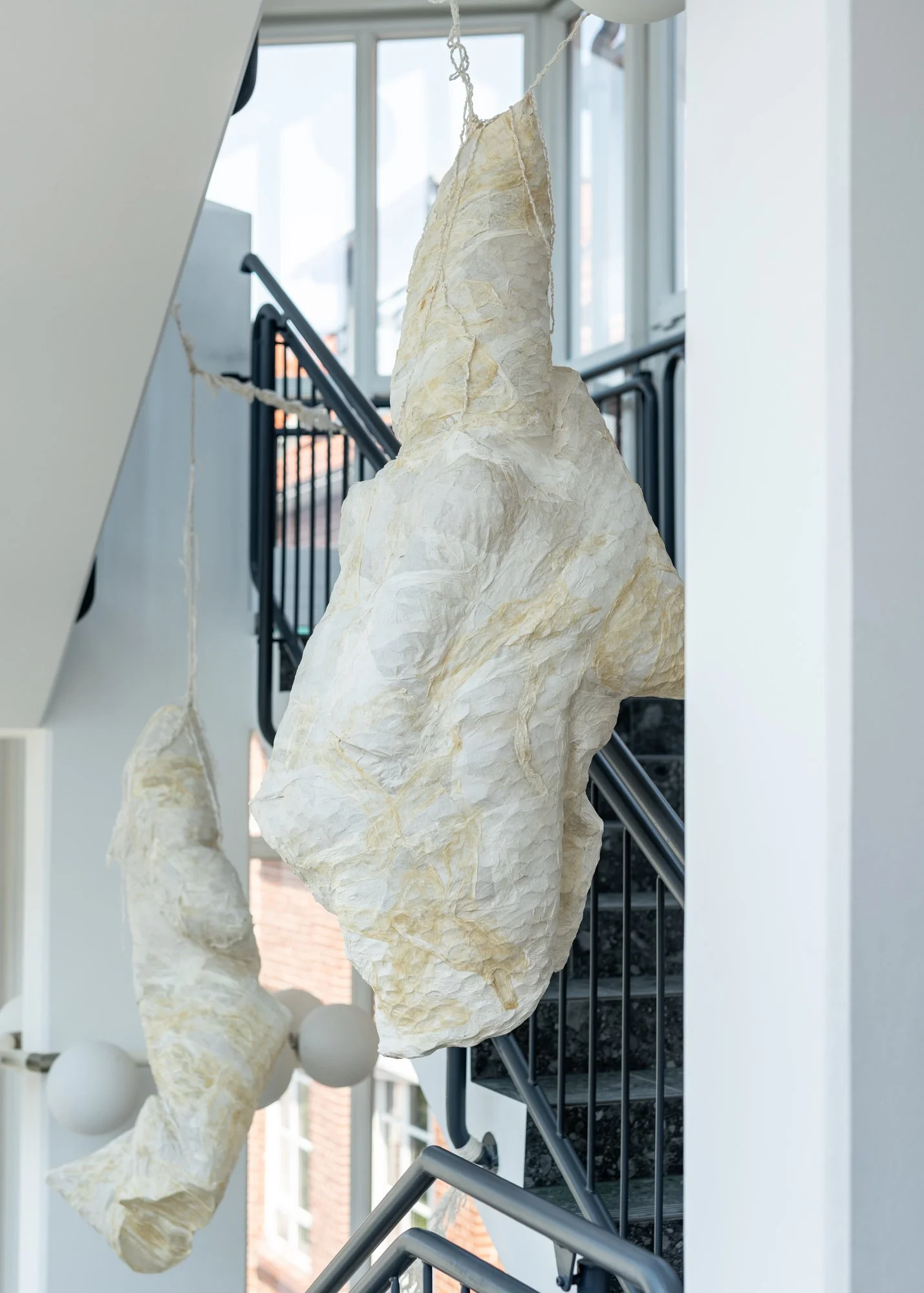
The pupae encapsulates memory’s transient state—constantly evolving, never static—existing in the space between knowing, ignoring, and forgetting.
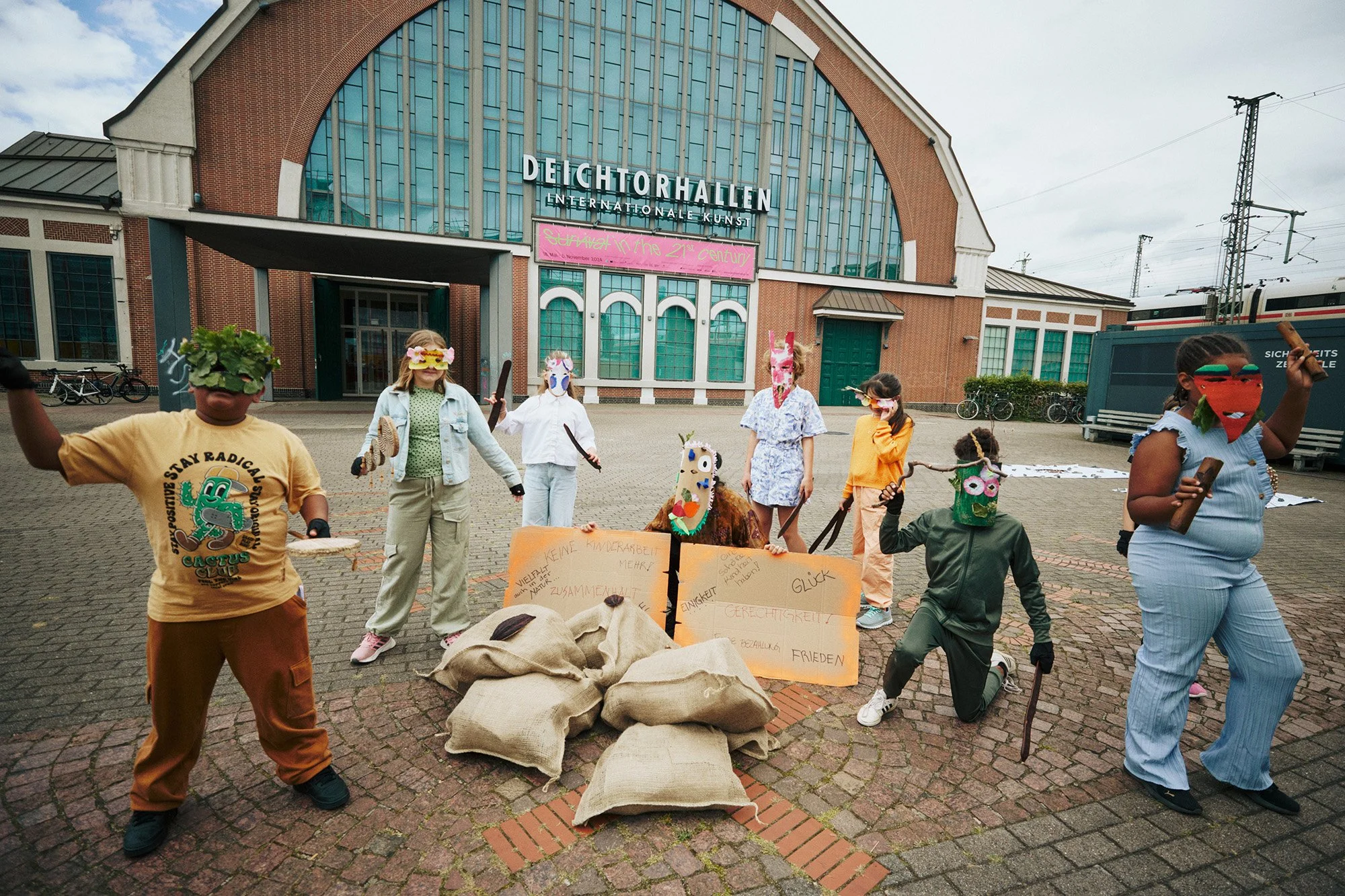
Art Projects for Young People
“Bittersüßer kakao”
Performance- Workshop, Klimastroeme Kids Festival, Hamburg.